Summary / TL;DR
A Google Knowledge Panel is an automatically generated information box that appears on the right side of search results and displays verified facts about people, places, brands or entities. It is powered by Google’s Knowledge Graph, which draws from reliable sources like Wikipedia, LinkedIn and official websites. Knowledge panels enhance visibility and credibility by presenting concise, factual content, making it easier for users to access trustworthy information. To acquire one, businesses must create a verified Google Business Profile, establish a clear entity home on their website, add structured data (schema markup), and ensure consistent information across reputable third-party sites. While inclusion cannot be requested for branded or personal panels directly, improving SEO, domain authority, and corroborative visibility increases the likelihood. Knowledge panels can be claimed through associated digital accounts, and changes require verified evidence. Despite no guaranteed method or timeframe, strategic brand development can improve eligibility for a panel.
Do you want to own real estate on Google Search results like established brands? You can certainly do that with a Google Knowledge Panel.
A knowledge panel on the right side of search results occupies more real estate than snippets, top results, images, and ads combined. That’s why local businesses and personal brands are devising strategies to create a Google Knowledge Panel of their own.
If you desire a personalised knowledge panel for your brand, continue reading as we provide comprehensive insights.
Want to receive updates? Sign up to our newsletter
Each time a new blog is posted, you’ll receive a notification, it’s really that simple.
What Is A Google Knowledge Panel?
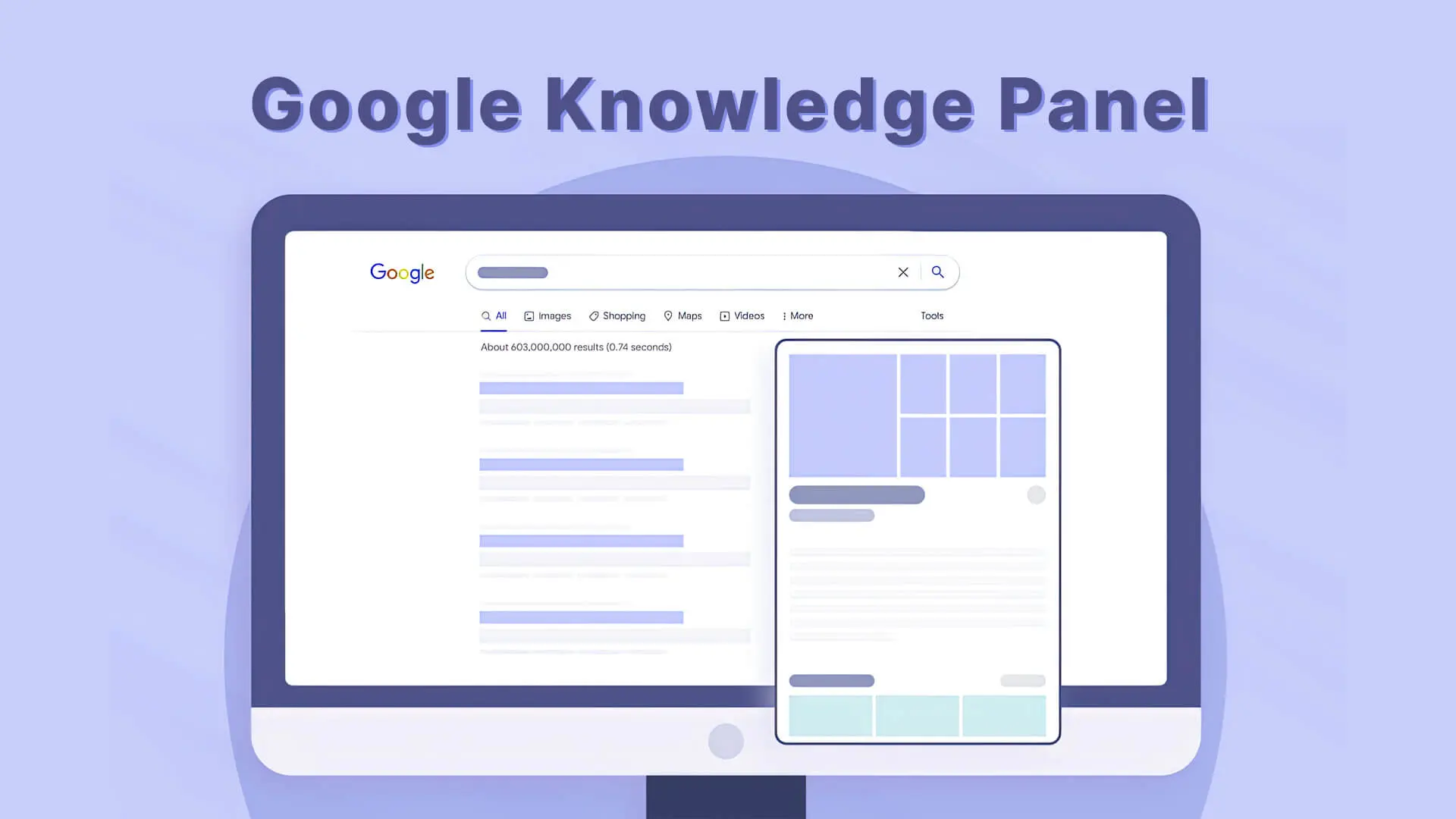
A Google Knowledge Panel is an information box that appears on the right side of search results. It shows up when you search for entities like people, businesses, places, or things.
These panels display verified facts sourced from Google’s Knowledge Graph. This database contains over 500 billion facts about 5 billion entities worldwide.
You may have noticed this concise information box during a desktop Google Search. It appears alongside Google Images results and provides quick facts and important links.
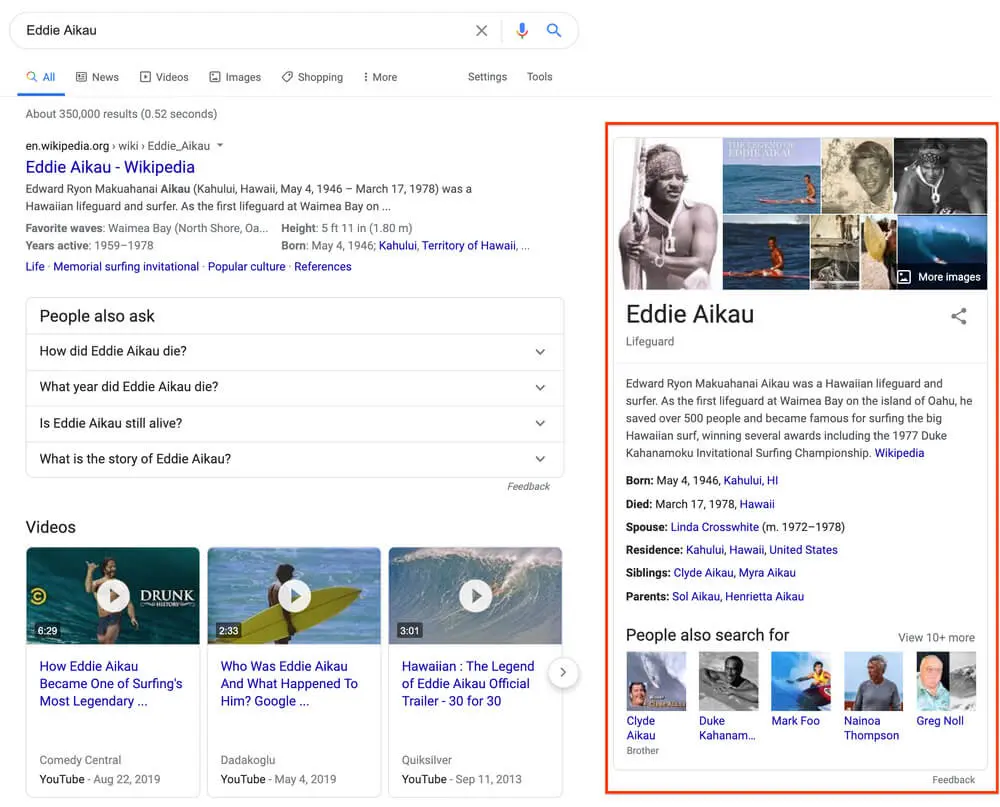
The panel delivers information deemed factual by Google’s algorithm. These facts come from Google’s Knowledge Graph, a vast database that powers search features across Google products.
Only verified data from trustworthy sources makes it to the knowledge panel.
Google aims to offer users a quick and concise overview of information through these automatically generated knowledge panels. When a user searches for a particular entity (business, person, place, or thing), a knowledge panel appears to:
- Provide facts about those entities
- Provide other related information about the entities
- Save users’ time by providing all facts in one place
Meanwhile, it would be best to remember that Google Business Profiles might resemble knowledge panels, but they are different. Unlike knowledge panels, business profiles are specific to local businesses, and information is supplemented by companies themselves, not Google’s Knowledge Graph.
Knowledge Panel vs Google Business Profile vs Featured Snippet
Understanding the difference between these Google SERP features is essential before you attempt to create a knowledge panel:
- Knowledge Panel: Automatically generated by Google from the Knowledge Graph. Displays verified facts about entities. Can be claimed but not directly created.
- Google Business Profile: Created and managed by business owners. Location-dependent and appears for local searches. Full control over information.
- Featured Snippet: Extracted from web pages to answer specific queries. Cannot be claimed. Appears above organic results.
- AI Overview: AI-generated summary appearing at the top of search results. Sources information from Knowledge Graph and web content. Cannot be directly optimised for, but Knowledge Panels influence what AI includes.
Knowledge Panels In The Age Of AI Overviews
The search landscape has fundamentally changed. Google’s AI Overviews now appear at the top of over 50% of search results.
These AI-generated summaries provide instant answers to user queries. About 90% of users read them when presented. This shift has reduced organic click-through rates by 18% to 64% for affected queries.
So, are Knowledge Panels still relevant? Absolutely. Here’s why they’ve become even more critical:
How AI Overviews Use Knowledge Panels
Google’s AI Overviews don’t generate information from thin air. They pull verified facts from the Knowledge Graph, the same database that powers Knowledge Panels. When AI Overviews mention your brand, the information typically comes from:
- Your verified Knowledge Panel data
- Structured data from your website
- Authoritative sources that feed the Knowledge Graph
- Your Wikidata and Wikipedia entries
This means having a Knowledge Panel directly influences how AI represents your brand in search results. Without one, AI systems may pull incorrect or incomplete information about your entity.
Generative Engine Optimization (GEO)
A new discipline called Generative Engine Optimization (GEO) has emerged to address visibility in AI-powered search. Knowledge Panels are foundational to GEO because they:
- Validate your entity: AI systems like Google AI Overviews, Bing Copilot, and ChatGPT Search use Knowledge Graph data to verify entity information before including it in responses.
- Provide structured facts: AI prefers structured, verified data over unstructured web content when generating answers.
- Establish authority signals: Entities with Knowledge Panels are more likely to be cited in AI-generated content.
- Ensure accuracy: Claimed and verified Knowledge Panels help ensure AI systems represent your brand correctly.
The 2025 Knowledge Graph Cleanup
In June 2025, Google conducted a massive “clarity cleanup” of its Knowledge Graph. They removed over 3 billion entities to improve data quality.
This cleanup was designed to enhance the accuracy of AI-generated responses. Entities that survived have strong, consistent signals across authoritative sources. They now have more prominent placement in both Knowledge Panels and AI Overviews.
This makes establishing your entity in the Knowledge Graph more competitive. But it’s also more valuable. The bar for notability has risen, but so have the rewards.
Why Do You Need A Google Knowledge Panel?
We know the importance of SEO in increasing online visibility of businesses by boosting organic search results. A Google Knowledge Panel can help you achieve similar visibility benefits while establishing your brand as an authoritative entity in both traditional search and AI-powered results.
It’s hard for people to overlook clear information amid the chaos of web search results, isn’t it? This is precisely where knowledge panels shine, promoting business information by making it stand out for users to see instantly.
A logical person always looks for an easy and quick way to find information. So, when provided with an alternative of easy-to-grasp data, they’ll happily use it instead of scrolling through the extended search results list. And that’s how knowledge panels help businesses and individuals.
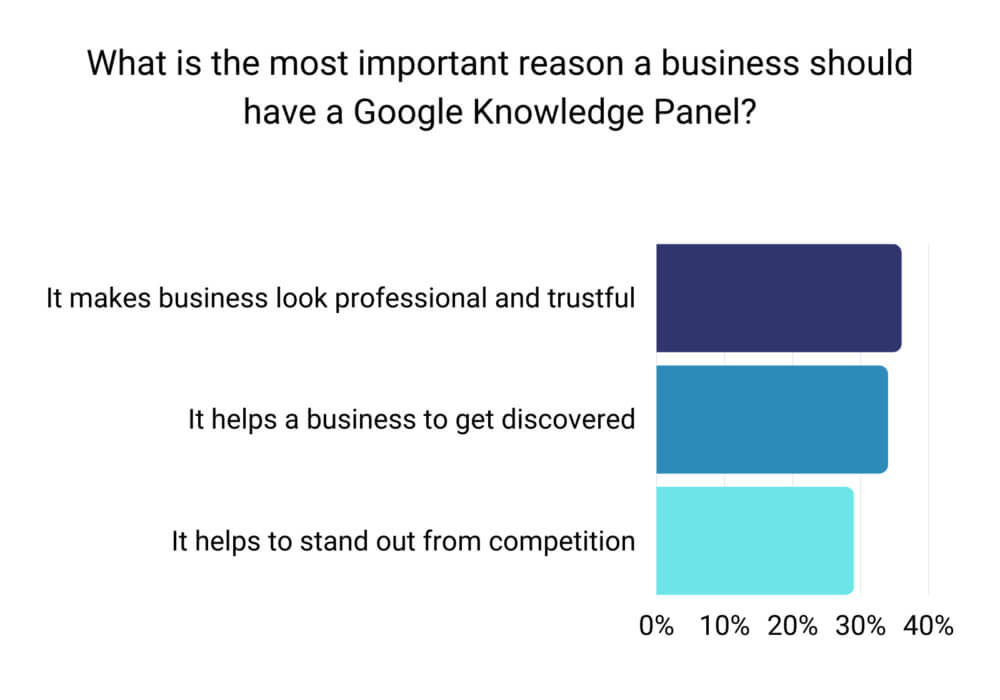
A Google Knowledge Panel enhances your business’s credibility. It presents key details about your company, services, and founders. Users receive reliable, factual information in one place.
When potential customers look up your business, they need accurate information. Knowledge panels deliver this, providing credible details that benefit both you and your audience.
To help you understand better, here is how a Google Knowledge Panel can help your brand:
- Increase visibility: Knowledge panels occupy premium real estate on the search results page, making your brand immediately visible to searchers.
- Build trust and credibility: Having a knowledge panel signals to users that Google recognises your brand as a legitimate, notable entity.
- Control your narrative: Once claimed, you can suggest edits to ensure accurate information is displayed about your brand.
- Improve click-through rates: Users are more likely to engage with brands that have established knowledge panels.
- Establish authority: A knowledge panel positions your brand as an authoritative source in your industry.
- Support Generative Engine Optimization (GEO): Knowledge Panels serve as entity validation signals for AI systems including Google AI Overviews, Bing Copilot, and ChatGPT Search, improving your visibility in AI-generated responses.
How Do Google Knowledge Panels Originate?
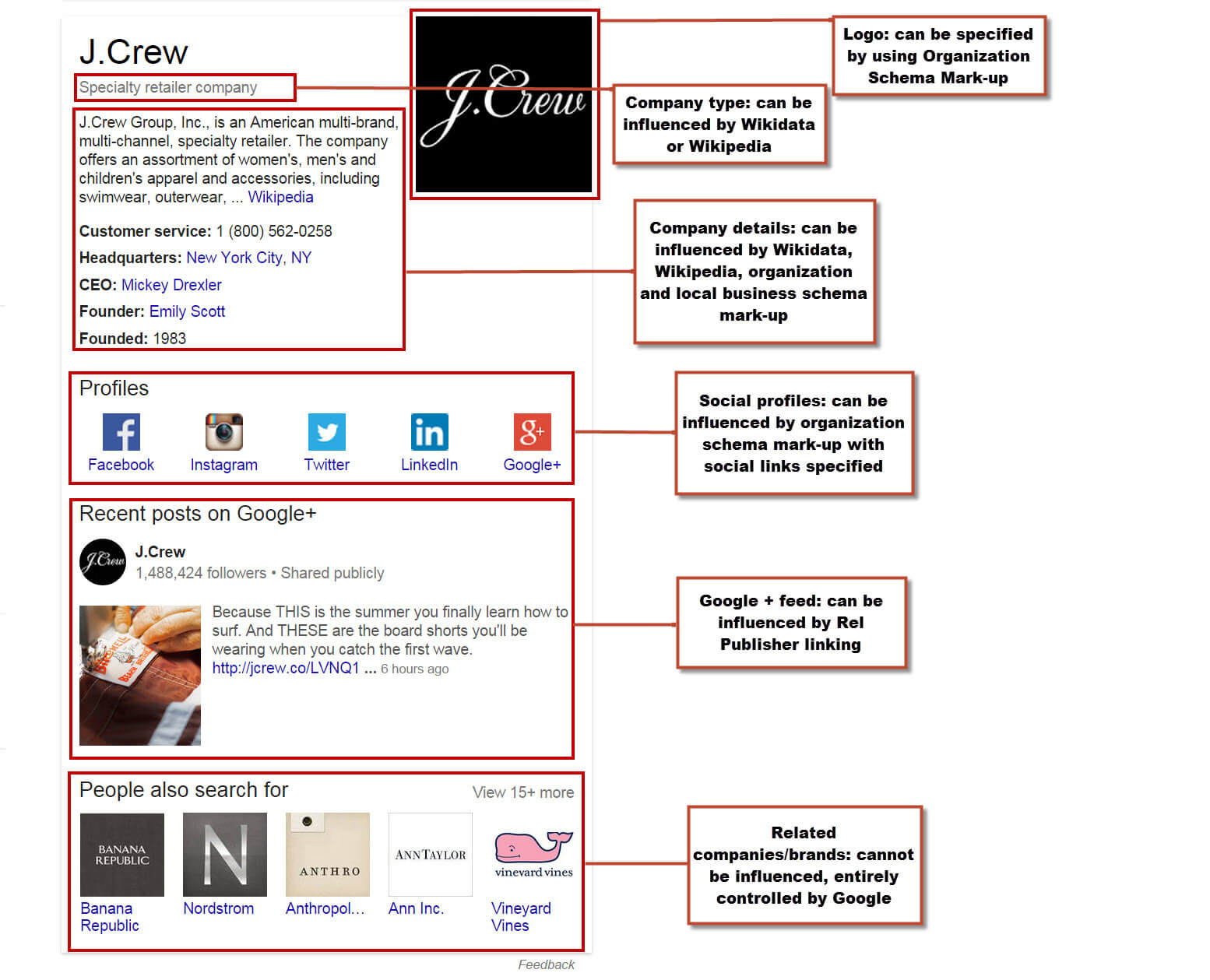
Google knowledge panels pop up when its algorithm is confident about the facts related to an entity, verifying information with reliable sources to ensure authenticity. As per Google’s official documentation, the information displayed in these panels is generated automatically from the Knowledge Graph.
These sources include Wikipedia, Wikidata, official websites, CrunchBase, LinkedIn, IMDb, MusicBrainz, and Facebook. Google also works closely with data partners to provide accurate information for specific entities like movies, music, sports, and television.
The information gathered from multiple sources is then added to Google’s knowledge graph, which feeds the panel. So, if you want your knowledge panel, slide into this knowledge graph, which is the encyclopaedia of facts for Google.
How To Create A Google Knowledge Panel
Now comes the most important question: “How do I get a knowledge panel?”
There isn’t a guaranteed way to create one. Google ultimately decides which entities receive a knowledge panel based on multiple factors.
Here’s what you need to know:
- You cannot directly create a knowledge panel without Google’s algorithmic approval.
- You cannot apply for a branded or personal panel.
- Even for local business panels, success depends on many factors beyond completing an application.
Let’s simplify the process of how to get a Google Knowledge Panel.
There are two types of knowledge panels: Local Panels and Branded/Personal Panels.
The key difference is location. Local panels only appear depending on the searcher’s geographical location. Branded and personal panels don’t have this constraint.
Local business owners can apply for a local panel. However, branded or personal panels are different. Google releases them at its discretion. But you can still work towards earning one.
You can make Google recognise your brand by improving the SEO strategy, growing your domain authority, establishing reliable backlinks, and expanding the brand among the target audience. You can follow this simple process to get a knowledge panel. We have discussed this in detail below.
1. Create A Google Business Profile
As Google’s algorithm creates knowledge panels, you need to be visible to Google for it to recognise your brand. That’s why creating a listing of your business on Google is the foremost thing you should do. You have to start by creating a Google Business Profile and verifying it.
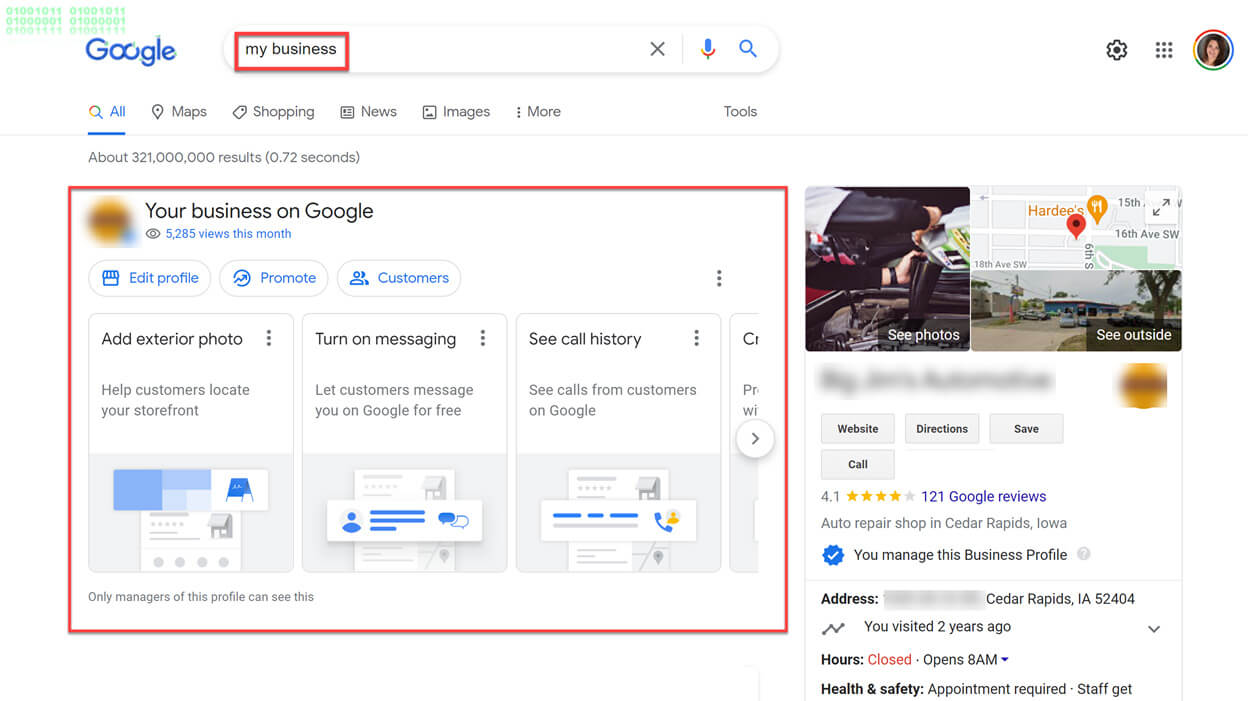
A Google Business Profile provides information about your brand for Google to pull data from. This helps your business become a known entity in Google’s algorithm.
A business account is also essential for listing on Google Maps.
2. Create An Entity Home For Your Business
Next, establish an entity home for your brand. This is a dedicated page on your website, typically the “About Us” section.
Google’s Knowledge Graph can source information from this page about your brand, policies, vision, and founders.
Your entity home should contain comprehensive, factual information. Once you add enough detail, Google will set this as its primary source for your knowledge panel.
As a side note, remember to set the entity home as your website, not third-party websites you have little or no control over.
3. Add Structured Schema Markup
Once you’ve set the entity home, populate it with structured data. Use schema markup from Schema.org to present information in a way Google understands.
Google processes structured data more effectively than plain text. Structured data (schema) communicates information in Google’s native language.
Key schema types for knowledge panels include:
- Organization schema: For businesses and companies, including name, logo, founders, and contact information.
- Person schema: For individuals, including occupation, affiliations, and social profiles.
- LocalBusiness schema: For location-based businesses with physical addresses.
- sameAs property: Links your entity to authoritative profiles on LinkedIn, Wikipedia, Wikidata, and social media.
4. Substantiate The Information
Google won’t believe everything a brand says without reliable sources to back it up. Substantiating your information is essential for getting a knowledge panel.
Find corroborative sources about your company that Google trusts. These include LinkedIn, Search Engine Journal, Crunchbase, and other credible platforms.
Ensure the information on these sources matches your entity home. Consistent information that traces back to your website can be considered a fact.
Use the same description on all corroborative sources. Although duplication of content isn’t ideal, identical descriptions across trusted sources creates credibility.
5. Wikipedia For A Solid Knowledge Panel
Wikipedia web pages containing detailed information are shortcuts to achieving a knowledge panel. Although Wikipedia is an easy ticket to having a knowledge panel, it isn’t a solid strategy for gaining one.
Third-party sites you have little or no control over must not be the entity’s home for your brand. Information can be easily manipulated, distorted, or erased, so you mustn’t hold your fort over there. Besides, creating Wikipedia pages is a time-consuming process.
This is why you should only use it as a corroborative tool instead of a full-blown strategy to achieve a knowledge panel.
6. Create A Wikidata Entry
Wikidata is a free, collaborative knowledge base that feeds directly into Google’s Knowledge Graph.
Unlike Wikipedia, Wikidata focuses on structured data rather than prose. This makes it easier to create and maintain an entry for your brand.
To create a knowledge panel using Wikidata:
- Create a Wikidata account and search for your entity to ensure it doesn’t already exist.
- Add a new item with your entity’s name and description.
- Include properties such as official website, social media profiles, founding date, and industry.
- Use the “sameAs” property to link your Wikidata entry to other authoritative sources.
- Add references to verify each claim you make about your entity.
Wikidata entries are particularly effective. Google directly references this database when populating knowledge panels.
Ensure your Wikidata information matches your entity home and other corroborative sources.
7. Improving Domain Authority
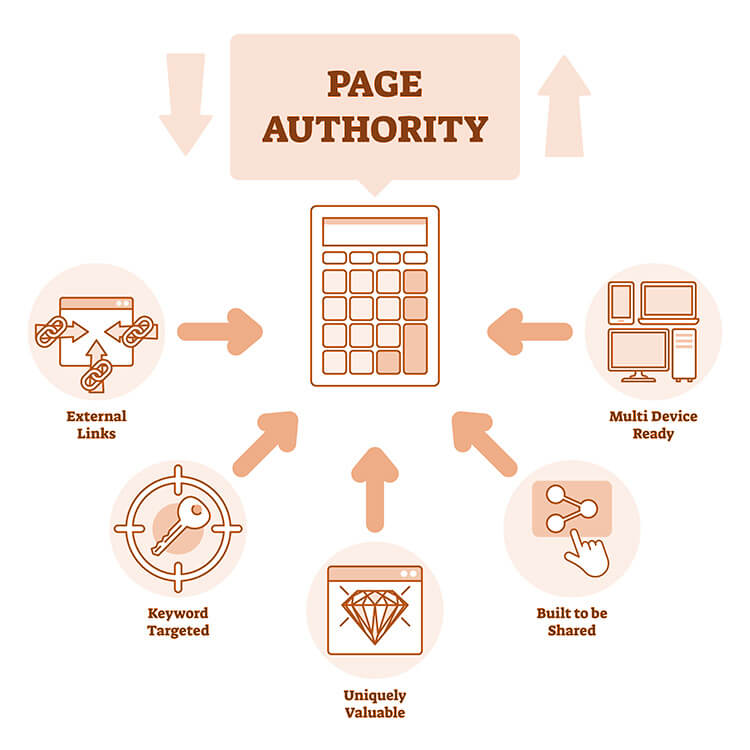
Every SEO expert will emphasise the importance of having excellent domain authority. DA is the stamp of credibility that a website needs.
If your website has a great DA, Google’s Knowledge Graph considers its information trustworthy. This is why increasing domain authority is challenging but worthwhile.
Improving your on-page and off-page SEO can enhance domain authority. Here are some ways to accomplish that:
- Optimise the structure of your website.
- Improve internal linking
- SEO optimisation of content
- Adding structured data (schema)
- Registering a website on Google Search Console
- Credible backlinks from sites with high DA
A user-friendly and mobile-friendly website also helps boost DA.
Note that building domain authority is time-consuming. If you aim for a jump from 30 to 80, you’ll need patience. Don’t give up. Keep working consistently, and it will prove beneficial in the long run.
8. Claim Or Apply For Your Knowledge Panel
After Google recognises your entity home, a simple web search will reveal your brand’s knowledge panel. Like all knowledge panels, it will have a globe icon.
As long as there’s a globe or social icon on your knowledge panel, you can claim it. Log in to your authorised accounts, such as Google Search Console, YouTube, Twitter, or Facebook.
Here are a few easy steps that you can follow to claim your knowledge panel.
- Sign in to your Google account.
- Scroll to the knowledge panel on the SERPs and select “Claim this knowledge panel.”
- Login to the Search Console and claim your knowledge panel.
That’s all you need to do if Google recognises you as the owner.
Sometimes, the knowledge panel won’t have a social or globe icon. In this case, you’ll need to apply to claim it manually.
Making changes to your panel can be intricate. You may need to submit screenshots, legal documents, and other proof to verify ownership.
How To Suggest Edits To Your Knowledge Panel
Once you’ve claimed your Google Knowledge Panel, you can suggest edits to update incorrect or outdated information. Here’s the process for managing and editing your knowledge panel:
- Search for your entity on Google and locate your knowledge panel.
- Click on “Suggest an edit” at the bottom of the panel (only visible if you’re signed in as the verified representative).
- Select the information you want to change, such as the title, description, images, or social profiles.
- Provide the correct information along with supporting documentation or sources.
- Submit your request for Google’s review.
Google reviews all suggested edits. They may approve, reject, or request additional verification.
The review process typically takes a few days to several weeks. If your edit is rejected, submit additional documentation to support your claim.
Types of edits you can request include:
- Updating or changing the featured image
- Correcting factual information (dates, descriptions, affiliations)
- Adding or removing social media profile links
- Requesting removal of incorrect related entities
Knowledge Panels For Artists, Musicians, And Creators
Are you an artist, musician, or content creator looking to get a Google Knowledge Panel? There are specific strategies tailored to creative professionals.
Google pulls artist information from various music and creative databases. These platforms are essential for your knowledge panel strategy.
Music Artist Knowledge Panels
For musicians, the following platforms feed directly into Google’s Knowledge Graph:
- Spotify for Artists: Claim your Spotify artist profile and ensure your bio, images, and discography are complete and accurate.
- Apple Music for Artists: Verify your Apple Music profile to establish another authoritative source.
- MusicBrainz: This open music encyclopedia is a primary source for Google’s music data. Create and maintain your MusicBrainz entry.
- Discogs: Add your discography and artist information to this music database.
Visual Artists And Creators
For visual artists, photographers, and other creators:
- Maintain active profiles on Behance, ArtStation, or relevant portfolio platforms.
- Ensure your work is featured on reputable art publications or gallery websites.
- Use Person schema markup on your portfolio website with your artistic occupation specified.
- Get listed in artist databases and directories relevant to your medium.
The key to getting a knowledge panel for artists? Establish consistent information across multiple authoritative platforms that Google trusts for creative professional data.
Knowledge Panel Eligibility And Notability Requirements
Not everyone qualifies for a Google Knowledge Panel.
Google determines eligibility based on “notability.” This refers to how well-documented and widely recognised an entity is across the web.
What Makes An Entity Notable?
Google considers an entity notable when:
- Multiple independent, reliable sources discuss the entity
- The entity has a significant presence across authoritative platforms
- There is consistent information about the entity across the web
- The entity is clearly defined (person, business, organisation, creative work)
Common Reasons Knowledge Panels Are Not Generated
If you’ve followed the steps above but still don’t have a knowledge panel, consider these common issues:
- Insufficient independent coverage (only self-published information exists)
- Inconsistent information across different sources
- The entity name is too generic or conflicts with other entities
- Limited online presence or newly established brand
- Information is not structured in a way Google can easily parse
Building notability takes time. Focus on:
- Earning mentions in reputable publications
- Maintaining consistent branding
- Ensuring accurate entity information across all platforms
Frequently Asked Questions
Do you have any doubts about Google’s knowledge panel? Here are some of the most common queries.
1. Can Knowledge Panels Disappear?
Yes, Google’s knowledge panel can disappear from Google Search results, and some of the underlying reasons are listed below.
- Deletion of the entity home
- Update in Google’s Knowledge Graph
- Negative feedback on the panel
- Panel violates Google’s search policies
2. How Long Does It Take To Get A Knowledge Panel?
There’s no exact time frame. The process typically takes a few weeks to several months.
Timing depends on your brand’s online presence, notability, and documentation across authoritative sources. Local business panels may appear faster once your Google Business Profile is verified. Branded or personal panels require building substantial credibility first.
3. Is Getting A Google Knowledge Panel Free?
Yes, getting a Google Knowledge Panel is completely free. Google automatically generates knowledge panels based on its Knowledge Graph.
You cannot pay Google to create one. However, you may need to invest time and resources into building your online presence across authoritative platforms.
4. Can I Create A Knowledge Panel For Myself?
You cannot directly create a knowledge panel. Google generates them automatically based on its algorithms.
However, you can influence Google’s decision by:
- Building a notable online presence
- Creating a Wikidata entry
- Maintaining consistent information across platforms
- Implementing structured data on your website
The steps in this guide will help increase your chances of getting a personal knowledge panel.
5. Is Having A Wikipedia Page Enough To Have A Knowledge Panel?
No, a Wikipedia page does not guarantee a knowledge panel. While Wikipedia is a trusted source, it’s just one of many factors.
Your entity needs consistent information across multiple authoritative sources. Wikipedia pages must also meet their own notability guidelines, requiring significant coverage in reliable, independent sources.
6. What Sources Does Google Use For Knowledge Panels?
Google’s Knowledge Graph pulls information from numerous authoritative sources:
- Wikipedia and Wikidata
- Official websites
- Google Business Profiles
- LinkedIn and Crunchbase
- IMDb and MusicBrainz
- Government databases and licensed data providers
The more consistent your entity information across these sources, the more likely Google is to generate a knowledge panel.
7. How Do I Verify My Google Knowledge Panel?
To verify and claim your knowledge panel:
- Search for your entity on Google
- Click “Claim this knowledge panel” at the bottom of the panel
- Sign in through an authorised account (Google Search Console, YouTube, Twitter, or Facebook)
Google will verify your identity and grant you access to suggest edits.
8. What Is The Difference Between A Knowledge Panel And A Business Profile?
A Google Business Profile is a listing you create and manage yourself. It appears in local search results and Google Maps. You have full control over the information.
A knowledge panel is automatically generated by Google from its Knowledge Graph. It appears for entities Google considers notable. You can only suggest edits after claiming it.
9. Are Knowledge Panels Still Relevant With AI Overviews?
Yes, Knowledge Panels are more relevant than ever.
Google’s AI Overviews source information directly from the Knowledge Graph. This is the same database that powers Knowledge Panels.
Having a verified Knowledge Panel ensures AI systems accurately represent your brand. With AI Overviews appearing in over 50% of searches, your Knowledge Panel data directly influences how AI describes your entity.
10. What Is Generative Engine Optimization (GEO)?
Generative Engine Optimization (GEO) is a strategy for optimising visibility in AI-generated search results. This includes Google AI Overviews, Bing Copilot, and ChatGPT Search.
Knowledge Panels are foundational to GEO. AI systems use Knowledge Graph data to validate entities and source verified facts. Building and claiming your Knowledge Panel is one of the most effective GEO strategies available.
Ready To Create Your Google Knowledge Panel?
This marks the end of our detailed guide on how to create a Google Knowledge Panel.
We’ve covered the essential steps:
- Creating your Google Business Profile
- Establishing an entity home
- Implementing structured schema markup
- Leveraging Wikipedia and Wikidata
- Building domain authority
- Claiming your knowledge panel
Getting a knowledge panel can be challenging and time-consuming. But the benefits for your brand’s visibility and credibility make it worth the effort.
This is especially true in the age of AI-powered search. With AI Overviews now dominating search results, having verified entity data has never been more important.
If you’re just starting out, focus on building your online presence consistently. With patience and the right strategy, your brand can earn its place in both traditional and AI-generated search results.
Key takeaways for creating a Google Knowledge Panel:
- You cannot directly create a knowledge panel, but you can influence Google’s decision through strategic online presence building.
- Consistency across authoritative sources is critical for the Knowledge Graph to recognise your entity.
- Wikidata and structured data are powerful tools often overlooked by brands.
- Once you have a panel, claim it to maintain control over your brand’s information.
- Knowledge Panels are essential for GEO (Generative Engine Optimization), as AI Overviews source directly from the Knowledge Graph to represent your brand in AI-generated responses.
If you need help setting up your Google Knowledge Panel, implementing schema markup, or developing a comprehensive SEO strategy, feel free to contact our dedicated team. We’re open to feedback and always ready to help.
Until then, make sure to check out some of our other guides.

Princess Kang
As a skilled member of our copywriting team, “Ji” brings a wealth of knowledge in digital marketing and strategic planning. Holding a Master of Arts in English Language and Literature Teaching, her academic prowess adds a distinctive edge to her work. Ji’s unique abilities are instrumental in enhancing organic rankings for our clients, showcasing her significant contribution to our team.
Find them on their website: sitecentre® and LinkedIn.