Summary / TL;DR
AI in content marketing has shifted from novelty to standard practice, with 89 to 94% of marketers now using generative AI tools in their workflows. Effective use spans all stages of the content process: planning with AI data tools and keyword research, generating drafts through LLMs like ChatGPT and Claude, testing and editing with tools like Grammarly, optimising for both traditional SEO and AI citation through AEO and GEO practices, and personalising content at scale. Google now accepts AI-generated content provided it meets quality standards, actively penalising scaled low-value production. Key risks include hallucination requiring human fact-checking, content homogenisation from over-reliance on AI output, and declining consumer trust in AI-perceived content. Tools have evolved considerably: Grammarly expanded into a full AI platform, Frase now covers generative engine optimisation, HubSpot built its Breeze AI ecosystem, Jasper pivoted to enterprise, and ChatGPT and Claude have become primary writing tools for many teams. The competitive edge in 2026 belongs to teams that combine AI efficiency with genuine human expertise, original data, and editorial voice.
AI in content marketing is no longer an experiment. It’s infrastructure.
When this article was first published in 2023, marketers were cautiously testing tools like ChatGPT and asking whether AI had a place in their workflow. By 2026, 89 to 94% of marketers are actively using generative AI in content creation, according to research from the Content Marketing Institute and HubSpot. The question has shifted entirely, from "should we use AI?" to "how do we use it well?"
This guide covers how AI is used across the content marketing process, what’s changed, which tools hold up, and the risks you should understand before going all-in.
Want to receive updates? Sign up to our newsletter
Each time a new blog is posted, you’ll receive a notification, it’s really that simple.
AI In Content Creation
The concern that AI would eliminate content creators hasn’t materialised. What has changed is the nature of the work.
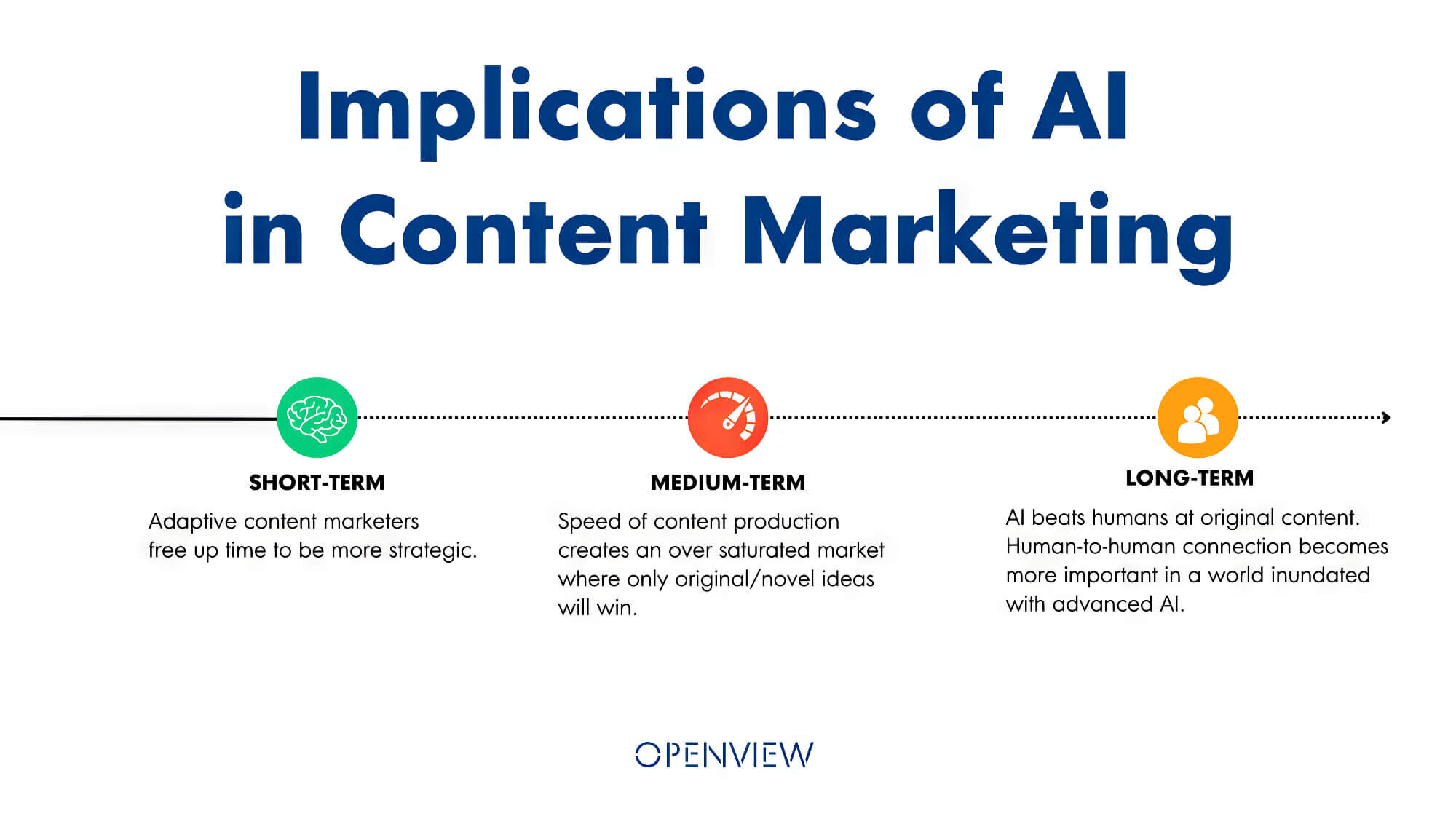
Writers who use AI effectively are not being replaced. They’re producing more, moving faster, and spending their time on the work that tools can’t replicate: strategy, judgment, lived experience, and original ideas. The ones at risk are those producing low-effort, high-volume content, because that work is now worth close to nothing.
AI tools are genuinely useful for research, drafts, outlines, keyword briefs, and editing. What they’re not good at is being original. Every model predicts the most statistically likely next word, not the most interesting one. That’s a feature for efficiency and a limitation for differentiation.
AI And Content Marketing
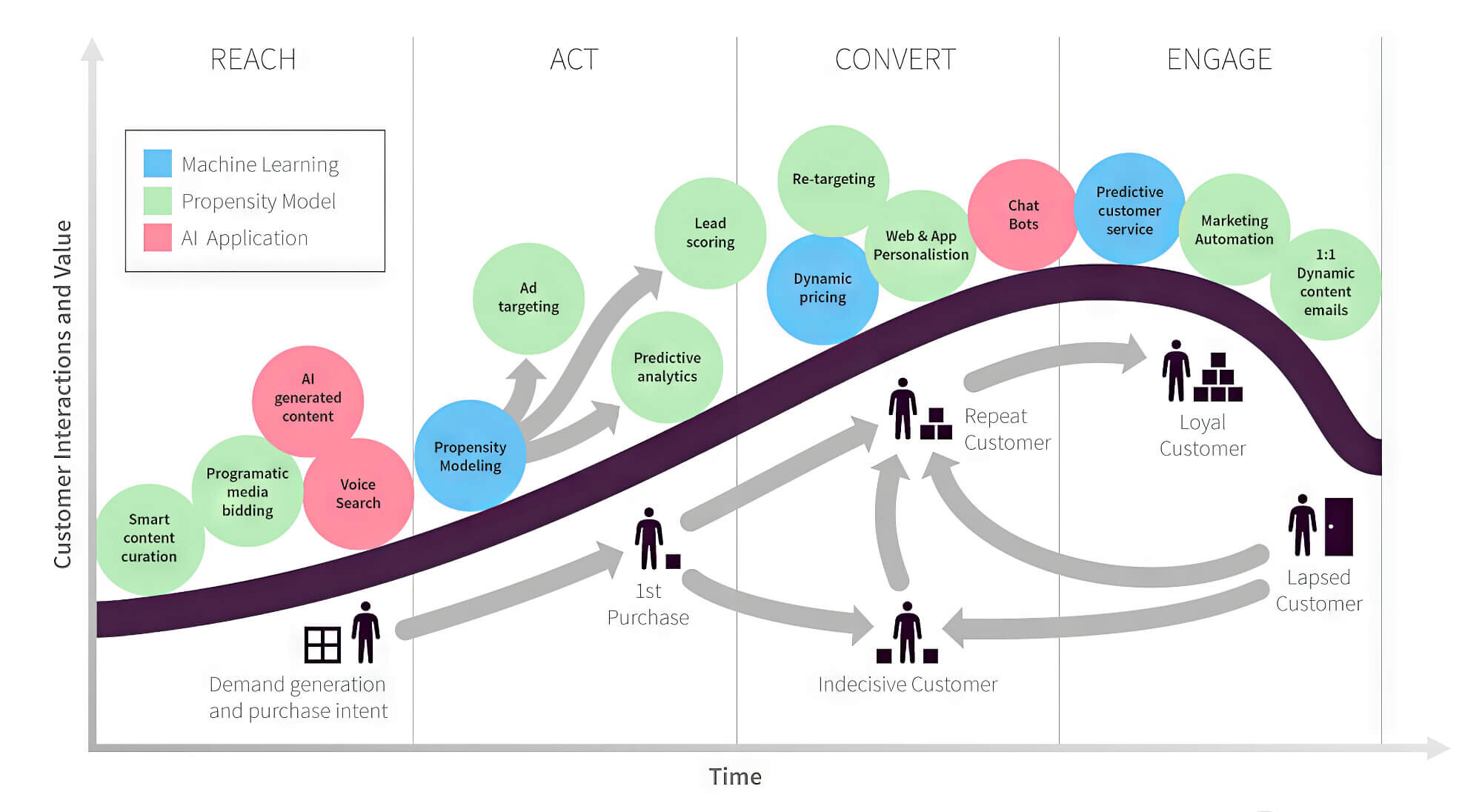
Content marketing spans planning, creation, distribution, and optimisation. AI has found a foothold across digital marketing broadly, and content is no exception.
Most content marketers now use AI to brainstorm topics, write drafts, summarise research, and repurpose existing content across formats. Ad copy, scripts, infographics, social content, and long-form articles are all fair game.
Optimising content for SEO remains time-consuming, but AI tools have made it significantly faster. The bigger challenge now isn’t producing content. It’s producing content that’s worth reading, useful to your audience, and built to rank and be cited by AI search tools.
Writer’s block is also less of a factor when AI can generate a rough starting point. That said, the starting point needs real human work before it’s genuinely useful. Marketing automation handles distribution. AI handles scale. Neither replaces editorial judgment.
Content Marketing Using AI
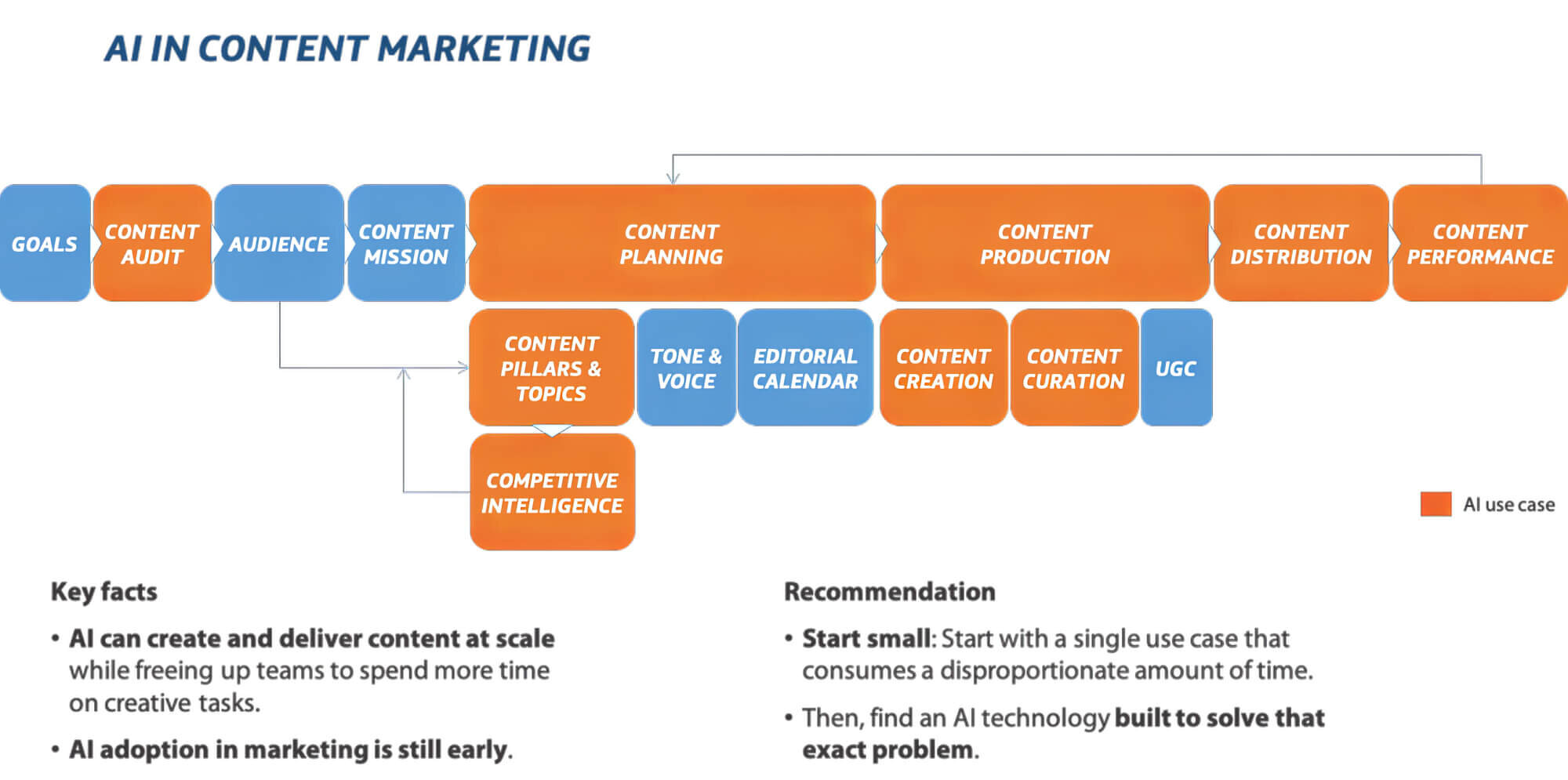
Breaking down the content creation process helps clarify where AI adds the most value. There are five key stages: planning, creation, testing, optimisation, and personalisation.
A. AI For Content Marketing Planning
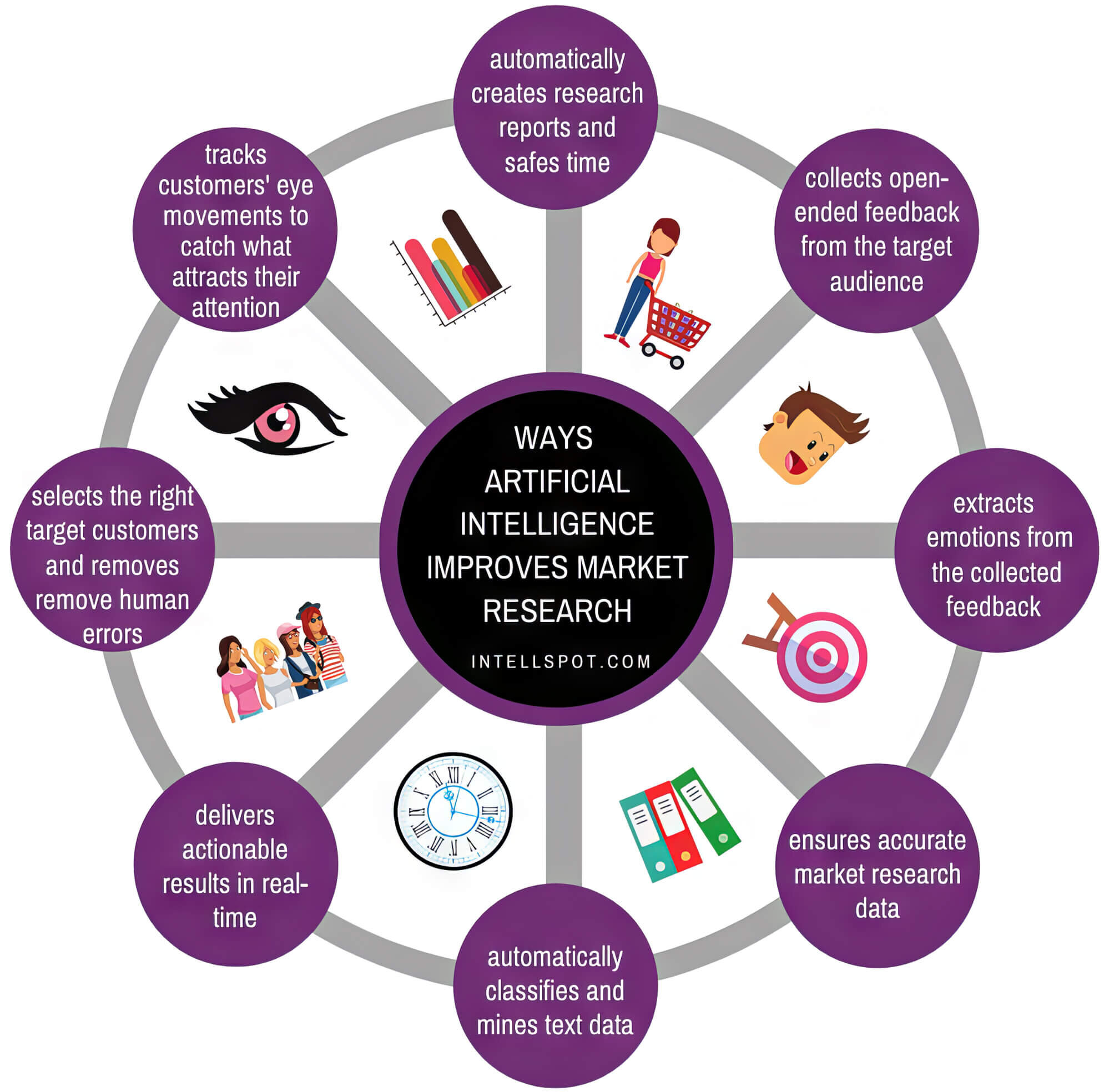
Planning involves market research, audience analysis, keyword development, and content briefs. Done manually, this takes considerable time. With AI, the same work can be completed in a fraction of that time, with better data behind the decisions.
AI analytics tools surface trends from large datasets quickly. AI keyword tools identify high-value targets and topical gaps in your existing content. The planning phase is also where AI tends to perform best, because it’s dealing in patterns and data, which is exactly what these models are built for.
B. AI For Content Generation
This is the stage most people think of first. AI writing tools range from assistants that help you write faster, to full generators that produce complete drafts from a prompt.
AI writing assistants work alongside you: formatting, proofreading, suggesting alternatives, and helping with structure. Full AI writers can generate blog posts, scripts, and ad copy once you’ve set the parameters.
The output quality depends heavily on what goes in. A vague prompt produces vague content. A detailed prompt that includes target audience, tone, key points, and keywords produces something far more usable.
Technically, these tools rely on Natural Language Processing and Natural Language Generation to produce text based on your inputs. In practice, most marketers now work with these capabilities through large language models (LLMs) like ChatGPT, Claude, or Gemini, which have significantly extended what earlier AI writing tools could do.
C. AI For Content Testing
Once written, content needs testing. AI testing tools check grammar, syntax, readability, and flow far faster than a manual review cycle.
They can also verify factual accuracy to a degree, though this has real limits. AI models can and do produce false information with complete confidence. Any factual claims in your content need a human review before publishing. This is not optional.
D. AI For Optimisation
AI-based keyword optimisation tools analyse how well your selected keywords are placed, how your article compares to ranking competitors, and where improvements can lift performance. Used properly, they improve search engine rankings without requiring you to manually review every competing page.
This is also where a newer discipline now matters. Answer Engine Optimisation (AEO) and Generative Engine Optimisation (GEO) are legitimate parts of a content strategy in the AI search era. With Google AI Overviews appearing on over 30% of searches, optimising to be cited by AI is as important as optimising to rank in a list of blue links.
The practical difference: AEO and GEO favour content that directly answers questions, includes statistics, cites credible sources, and is structured so AI models can extract clear answers. Think less about keyword density and more about being the clearest, most credible answer available.
E. AI For Personalisation
Content personalisation helps content resonate with specific audiences. AI-based data analysis tools identify the preferences and interests of any target demographic and provide suitable recommendations, letting you adjust tone, format, or messaging to match who you’re speaking to.
At scale, this is something AI handles far better than any manual process. Personalisation engines integrated into CRM platforms can serve different content to different segments based on behavioural segmentation, location, and buying stage. Personalising content marketing through AI is one of the higher-ROI applications available right now.
Advantages Of Using AI In Content Marketing
1. Improve Content Relevance
AI content tools, when used with proper human input and editing, produce content that can genuinely serve readers. Well-produced AI-assisted content ranks, converts, and builds trust. Poorly produced AI content does the opposite, and Google’s current policies actively target it.
The quality bar has risen significantly as AI-generated content has flooded the web. Content that provides real value, real data, and a real perspective will always outperform content that’s simply generated and published without care.
2. Generate Better Keywords And Produce Fresh Content
AI content marketing tools surface keyword opportunities faster than manual research. They can also identify content gaps: topics your competitors cover that you don’t, or questions your audience is asking that nobody is answering well.
Fresh content production becomes faster too. Work that once took days of research and writing can often be reduced to hours, which matters when you’re trying to maintain a consistent publishing schedule, avoid content decay, and keep your content genuinely unique.
3. Enable Content Automation And Improve Efficiency
AI-driven marketing automation extends well beyond scheduling. AI can repurpose a single long-form post into multi-purpose content — social snippets, email copy, video scripts, and FAQ content — within minutes. Teams that previously needed separate specialists for each format can now produce multi-channel content from a single source.
This frees up human attention for strategy, ideation, and quality control, which is where effort produces the most return.
4. Improve The Performance Of Social Media Posts
Social media content is high-volume and time-sensitive. AI tools create posts, analyse engagement patterns, identify trending topics, and refine your social media marketing based on real-time performance data.
For content marketers managing multiple platforms, this is one of the clearest productivity wins AI offers. The creative decisions still need a human. The volume burden doesn’t.
Google, AI Content, And What Marketers Need To Know
Google’s position on AI-generated content has changed considerably since 2023, particularly following its Helpful Content updates, and it’s worth being direct about what the current guidance actually says.
AI-generated content is not penalised by default. Google’s official guidance, last updated in December 2025, states that appropriate use of AI or automation is not against its guidelines. Quality matters. Production method does not.
What is penalised is "scaled content abuse": using AI to mass-produce low-value pages designed to manipulate rankings. Google has issued manual actions specifically targeting this since mid-2025, with affected sites losing search visibility entirely.
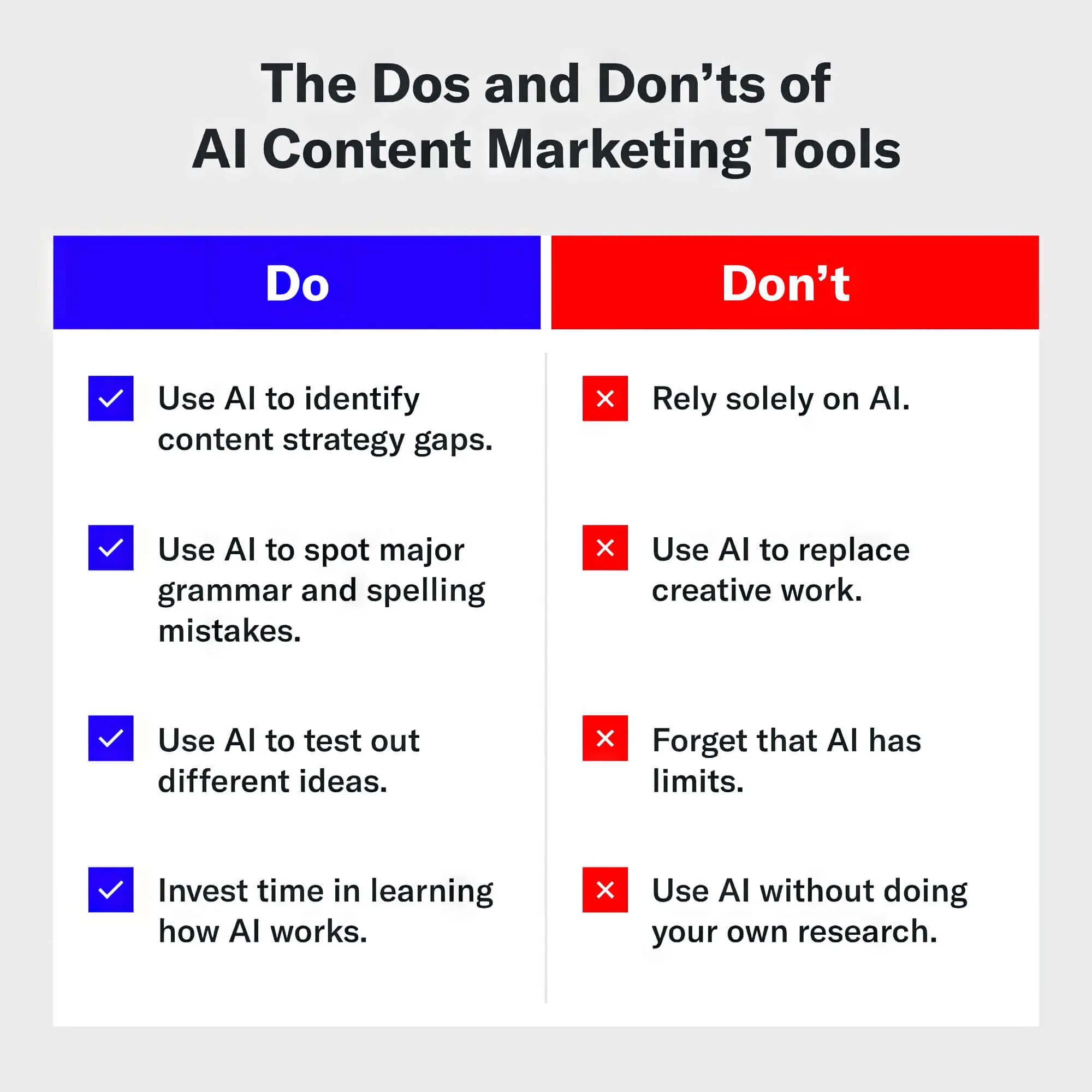
The practical guidance is clear. Use AI to assist, accelerate, and edit. Apply genuine human expertise and editorial judgment to every piece. Don’t publish AI output without meaningful review and enhancement. Don’t build a strategy around volume at the expense of quality.
Beyond rankings, there’s also the world of AI Overviews and AI Mode, which rolled out in Australia from late 2024. These tools answer queries directly, pulling from content they judge to be clear, authoritative, and well-structured. Getting cited in AI Overviews requires a different kind of optimisation: direct answers, clean structure, credible sourcing, and specific data points. This is AEO and GEO in practice, and it’s now a genuine part of any content strategy that cares about long-term search visibility.
The Risks Worth Understanding
No honest guide to artificial intelligence in content marketing skips the downsides. There are three that matter most.
Hallucination. AI models generate false information with the same confidence as accurate information. A 2025 study found 47% of marketers encounter AI inaccuracies multiple times a week, and more than a third have unknowingly published hallucinated content. Every factual claim in AI-generated content needs verification before it goes live. Every time.
Homogenisation. When most teams use the same tools with similar prompts, the output starts to look and sound identical. Research published in 2024 and 2025 confirmed this: AI content converges toward average. Brands that rely too heavily on unedited AI output produce content that looks polished but feels indistinguishable from everyone else. The fix is original data, genuine perspective, and a strong editorial voice — which is exactly what brand management in the age of AI demands.
Consumer trust. Trust in AI-generated content is low and declining. Gartner’s 2025 survey found 53% of consumers distrust AI-powered search results. Australian data showed the lowest consumer trust in AI globally, with just 29% trusting companies handling AI data. Publishing AI content without clear quality signals and genuine editorial authority is a brand risk, not just an SEO one. The ethical implications of AI in marketing extend well beyond rankings.
AI Content Marketing Tools And Software
The tool landscape has shifted significantly since 2023. Here are the key platforms worth knowing in 2026. We have covered AI-powered tools in more depth elsewhere, but these are the core players for content marketing specifically.
1. Grammarly
Grammarly is no longer just a proofreading tool. It’s now a full AI writing platform with generative capabilities for drafting, rewriting, tone adjustment, and summarising. With over 40 million daily active users, it remains one of the most practical tools for teams that want AI assistance integrated directly into their editing process.
2. Frase
Frase has expanded well beyond content briefs. It’s now a full research, writing, and optimisation platform that tracks how content is cited in ChatGPT, Perplexity, and other AI platforms, alongside traditional SEO signals. One of the stronger budget options for content teams wanting an end-to-end workflow.
3. HubSpot
HubSpot has built one of the most comprehensive AI ecosystems in marketing under its Breeze AI suite. The Content Agent generates and repurposes content across formats. Breeze Copilot sits throughout the platform as a conversational AI assistant. Breeze Intelligence handles data enrichment and buyer intent. If your team is already in HubSpot, the advantage is that all of this connects directly to your CRM data. HubSpot shipped 200+ AI-related features in the first half of 2025 alone. It’s a genuine AI content marketing platform now, not just a CRM with some AI features added.
4. Jasper
Jasper is still operating, but it’s a different product to what it was in 2023. After ChatGPT commoditised basic AI writing, Jasper struggled significantly, cut its valuation, replaced its founding team, and pivoted decisively toward enterprise. It now serves 850+ enterprise customers, including roughly 20% of the Fortune 500. For individual creators or small teams, it’s no longer the standout option. For enterprise content operations needing brand governance and AI agent workflows at scale, it remains a capable platform.
5. HyperWrite
HyperWrite continues to operate and still offers a free tier, but it hasn’t kept pace with the major players. Most professional content teams have moved to more capable tools. Worth trialling if you want a simple free starting point, but not the most advanced option available in 2026.
Using AI For Content Marketing: The Right Approach
The teams getting the best results from AI aren’t the ones replacing their writers. They’re the ones giving their writers better tools and clearer processes.
A practical AI content marketing workflow looks like this. AI handles research, briefs, first drafts, and repurposing. Humans handle strategy, expert input, editorial judgment, and fact-checking. Neither works well in isolation.
The single biggest differentiator between good AI-assisted content and bad is the quality of the human contribution. Original insights, real data, specific examples, and a genuine editorial voice are things AI cannot generate reliably. They’re also what makes content worth reading. And increasingly, they’re what Google, ChatGPT, Perplexity, and AI Overviews reward with citations and visibility.
AI has genuinely transformed content marketing. The competitive advantage now belongs to teams that combine AI speed with the human expertise no model can replicate.

Brodey Sheppard
Brodey is the CEO of sitecentre®, leading his distinguished Australian digital marketing agency using data analytics and Artificial Intelligence in SEO and Paid Advertising. His adept use of machine learning and AI has gained industry-wide recognition, Brodey has received several industry awards for SEO, Web Design and business, including the Young Small Business Champion Entrepreneur 2023 award. With 15 years under his belt, Brodey is amongst Australia’s most influential digital marketers.
Find them on their website: sitecentre®, Facebook and LinkedIn.