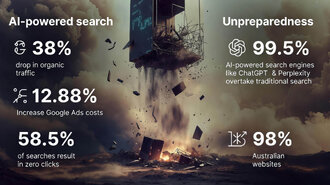
Summary / TL;DR
Google AI Overviews (formerly the Search Generative Experience, or SGE) is Google’s AI-powered search feature that generates summarised answers at the top of search results. Powered by a custom Gemini 2.5 model and available in over 200 countries including Australia, it reaches 2 billion monthly users and has fundamentally changed how information is surfaced in search. The feature was rebranded from SGE to AI Overviews in May 2024. Google has since introduced AI Mode as a more advanced, conversational extension of the experience available via Search Labs.
Back in the early 2000s, Google made its mark with its search engine, handling millions of searches daily. It quickly became the go-to for finding information online.
Since those early days, Google’s search engine has seen a lot of changes, all aimed at boosting its capabilities and making the user experience even better.
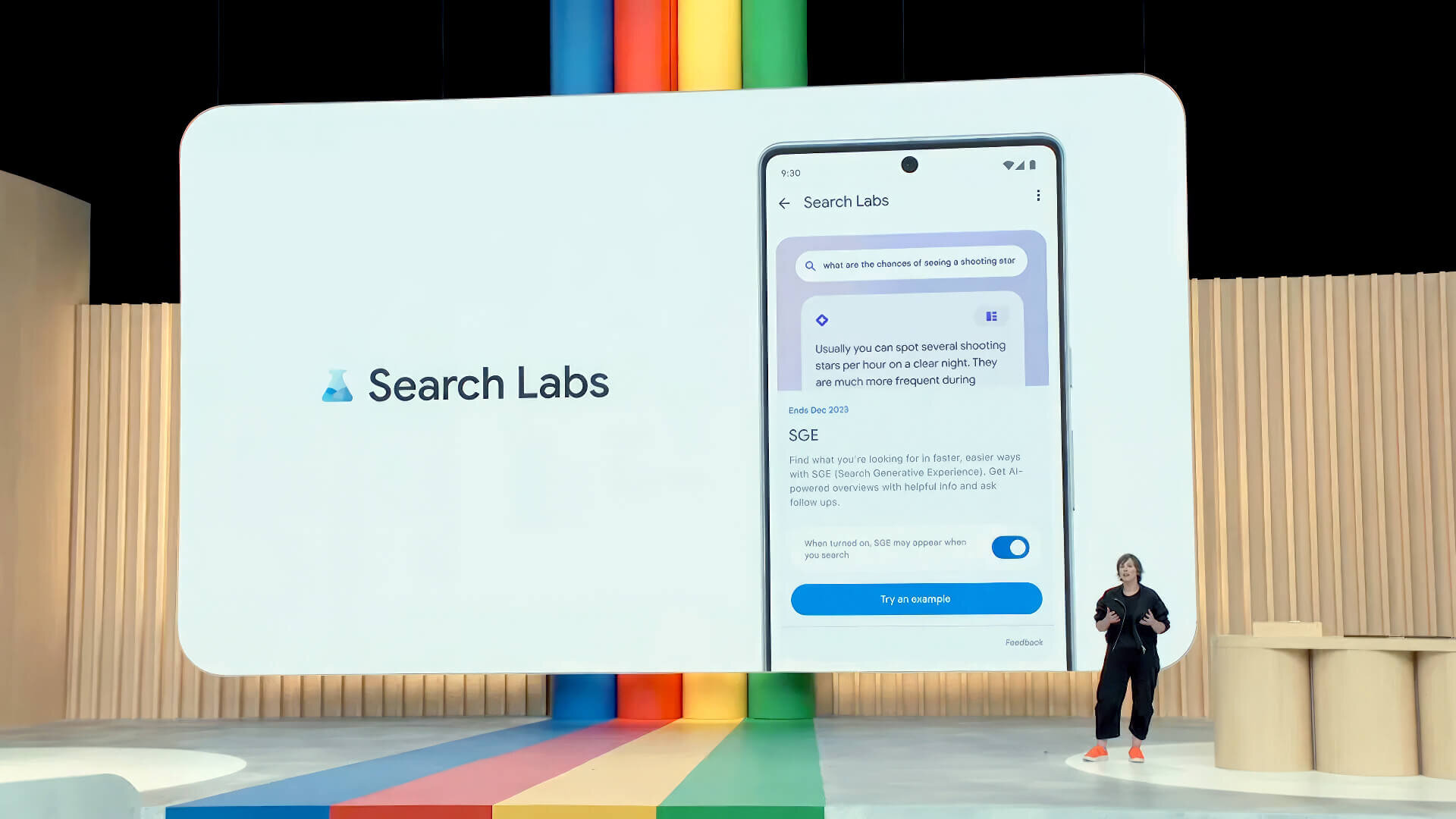
In 2023, Google launched the Search Generative Experience (SGE), an experimental AI-powered overlay on search that generated direct answers instead of links. In May 2024, it officially graduated from that experiment and was rebranded as Google AI Overviews. That is the name Google uses today, and the feature now reaches over 2 billion users monthly across more than 200 countries and 40 languages, including Australia.
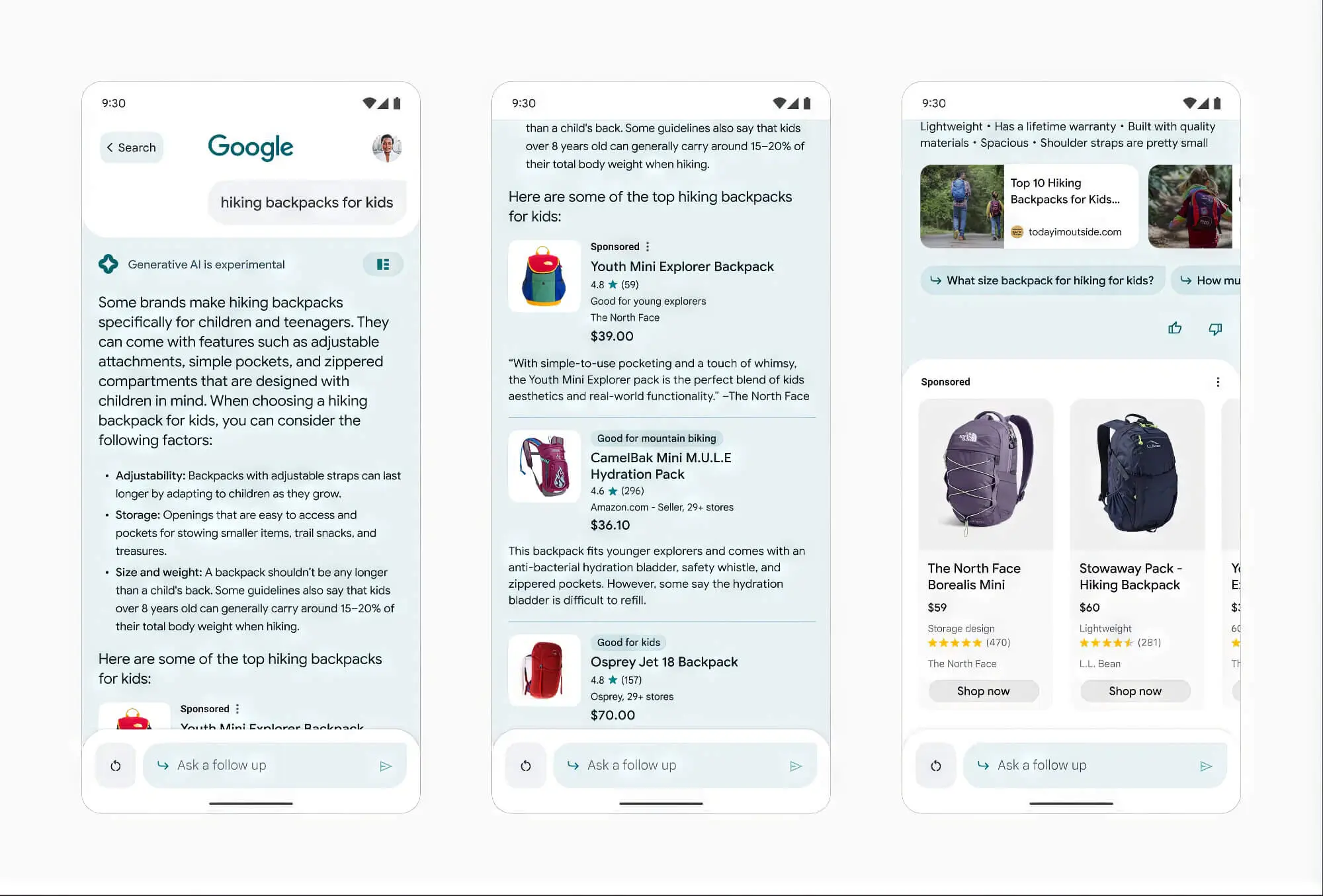
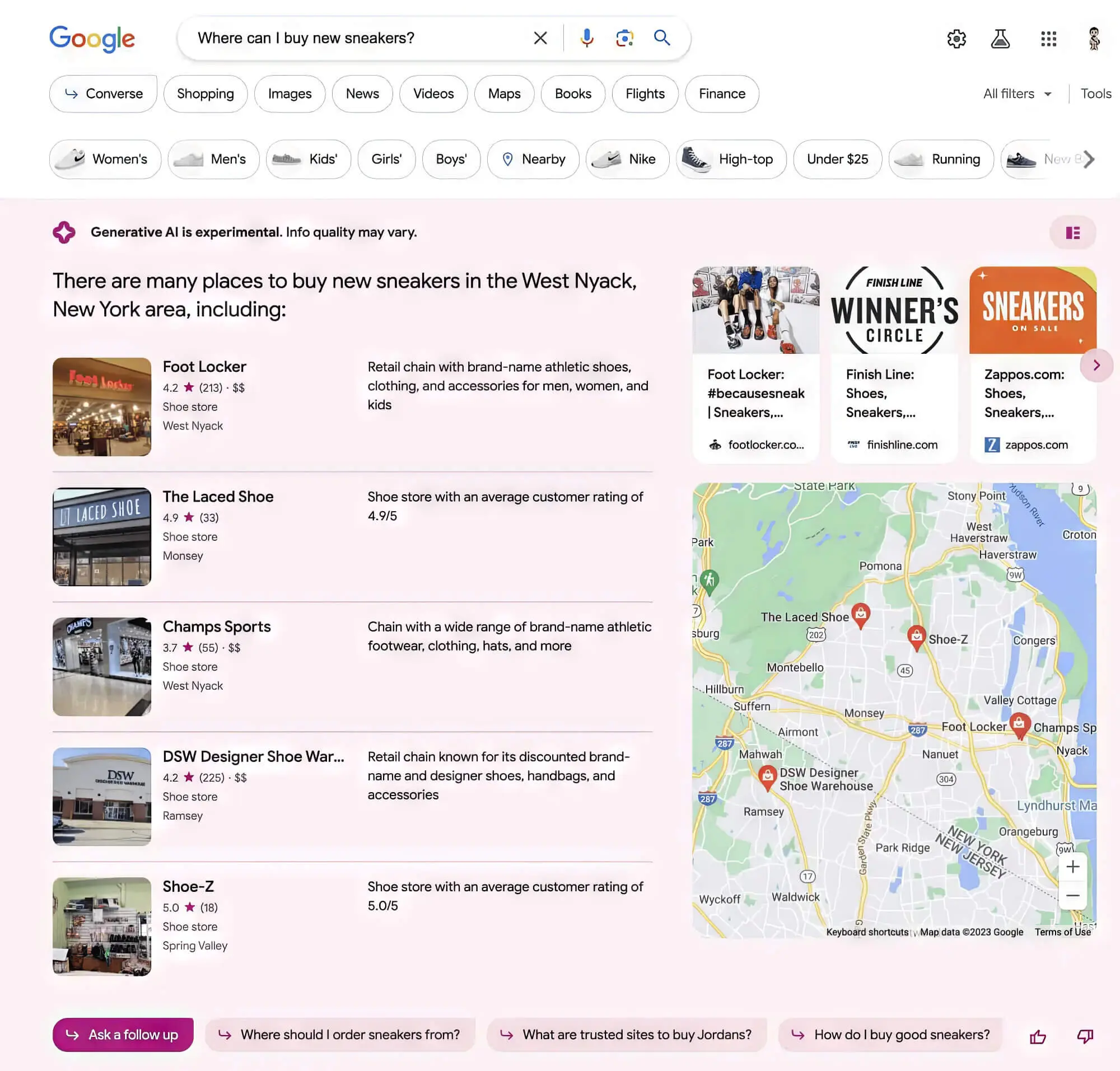
Rather than returning a list of websites, AI Overviews generate an AI-powered summary at the top of search results, pulling from across the web to give you a direct answer. Businesses can also benefit from ad placements within these results, though that comes with real implications for organic traffic.
Want to receive updates? Sign up to our newsletter
Each time a new blog is posted, you’ll receive a notification, it’s really that simple.
How Google AI Overviews Work
Whether you run a business or just want to understand what you’re looking at in search results, it helps to know what’s actually happening behind the scenes.
Searches work the same as they always have: you type a query and hit enter. The difference is what appears at the top of the results page. Where you once saw a list of links, AI Overviews now displays an AI-generated summary for eligible queries.
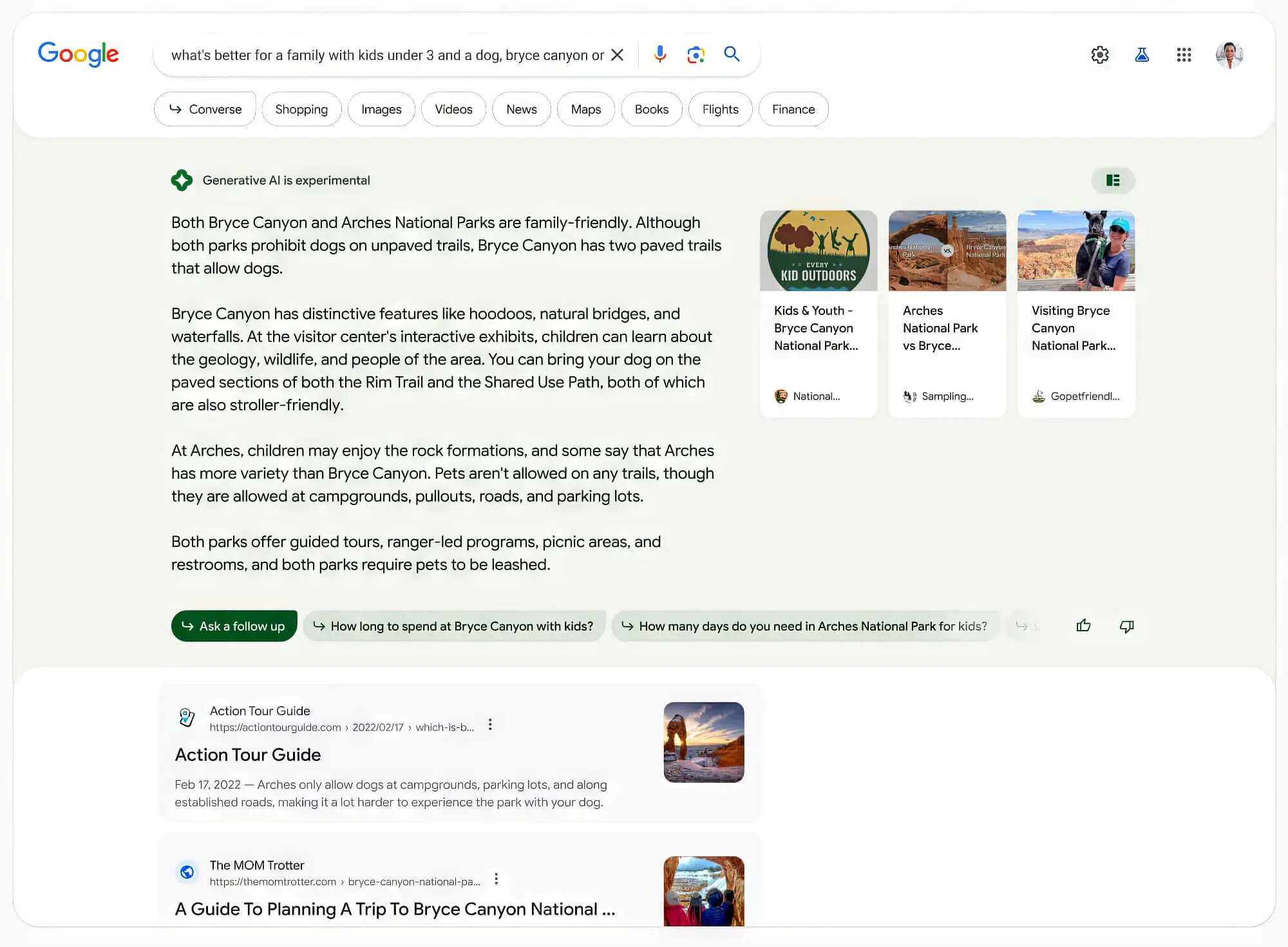
Under the hood, Google uses a process called Retrieval Augmented Generation (RAG). Rather than searching the internet live, the system combines its Gemini 2.5 model (which replaced the original PaLM 2 language model used during the SGE experiment) with Google’s existing search index and Knowledge Graph to synthesise an answer. It reads and draws from multiple sources simultaneously, then presents a coherent summary with linked citations.
AI Overview results also include suggested follow-up questions and source links so you can dig deeper if the summary doesn’t fully answer what you’re after.
What Appears in an AI Overview
A typical AI Overview response has a few distinct parts: a short generated summary at the top, key linked points within that summary, an option to expand the answer for more detail, and a row of source website links. Not every search triggers one. They appear most often for informational queries rather than navigational or transactional ones.
Which Searches Trigger AI Overviews
AI Overviews don’t appear for every query. They’re most common for informational searches, things like "how does X work" or "what is Y." Prevalence varies significantly by industry: health queries see AI Overviews in roughly 23% of searches, science around 20%, while real estate sits well below 1%. If your business operates in a category where they rarely appear, the direct impact on your traffic will be minimal. If you’re in health, education, or consumer goods, it’s a different story.
Benefits Of Using Google AI Overviews
1. Enhanced Relevance
AI Overviews utilise advanced algorithms and AI to analyse vast amounts of data, user behaviour, and context. By continuously learning and adapting, it can understand user intent better and provide highly relevant search results. The generative AI can identify patterns and locate the most pertinent data, enhancing the search experience.
2. Real-Time Updates
Google’s AI Overviews can provide the latest and most relevant information by continuously analysing and generating real-time content. It ensures up-to-date responses to search queries so users can access the most current news, trends, and insights. This makes the search experience more accurate and informative.
3. Personalised Search Results
When users search for information using AI Overviews, Google learns from those interactions and user preferences by analysing search behaviour and data. It can understand individual interests, context, and intent and generate content that fits different users’ needs, resulting in a more personalised experience.
4. Greater Efficiency
AI Overviews reduce the time and effort required when searching for information by providing more relevant and up-to-date answers directly in the results page

Brodey Sheppard
Brodey is the CEO of sitecentre®, leading his distinguished Australian digital marketing agency using data analytics and Artificial Intelligence in SEO and Paid Advertising. His adept use of machine learning and AI has gained industry-wide recognition, Brodey has received several industry awards for SEO, Web Design and business, including the Young Small Business Champion Entrepreneur 2023 award. With 15 years under his belt, Brodey is amongst Australia’s most influential digital marketers.
Find them on their website: sitecentre®, Facebook and LinkedIn.